9/16/2026
By train to the stars
In this travel feature, we’ll be exploring the origins of humanity’s fascination with the universe. We’ll show you how our trains can take you to the most beautiful observatories and planetariums – from Prague’s Klementinum, through the spherical cinema in Ostrava and the Slovak observatories in the Tatra Mountains, right to Fulda in Germany, Germany’s first official ‘Star City’ in Germany, which is battling light pollution.
A Tower Without a Cross
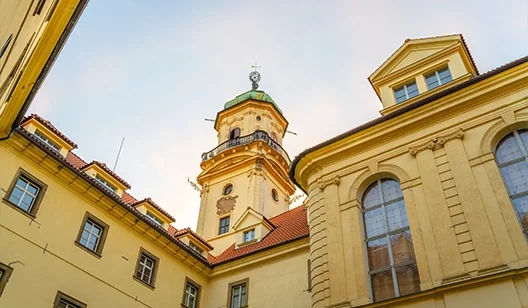
Prague astronomers continued to gaze at the stars in the centuries that followed. A slender Baroque tower still stands on the site of the former Jesuit college, the Klementinum. It served as an observatory from 1751 until 1939.
It is accessible as part of a guided tour, which takes visitors not only to the tower’s galleries but also to the Meridian Hall, with its exhibition of historical astronomical instruments, and to the Baroque library, which is considered the most beautiful in the world.
Starry Prague
Prague, “whose glory touches the stars”, has been linked to the stars throughout its history, and it is no coincidence that two eminent astronomers, Tycho Brahe and Johannes Kepler, worked here during the reign of Rudolf II. Kepler discovered two of his laws of physics here, whilst Brahe is even buried in Prague – you can see his grave in Týn Church. No less interesting is the Petřín Observatory, which you can read about, amongst other things, in our autumn magazine.
All the way to the mountain peaks
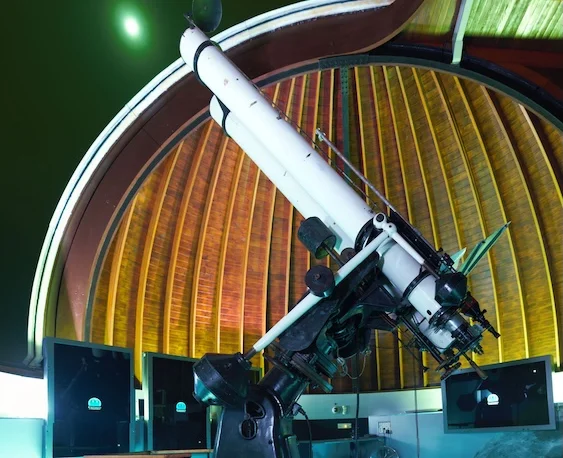
You can never get enough of the Tatras! You can get off the train at Štrba station and set off to visit two high-altitude observatories in one go. You’ll find the first one when you climb up to Skalnaté pleso. The second lies right at the summit of the mountain (2,663 metres above sea level), which you can only reach by cable car. This observatory is interesting in that it focuses primarily on observing the Sun. Both observatories operate primarily as scientific research centres and are open to the public during open days, held once in July and once in August. Tickets to the Tatras >

Copernicus wherever you look
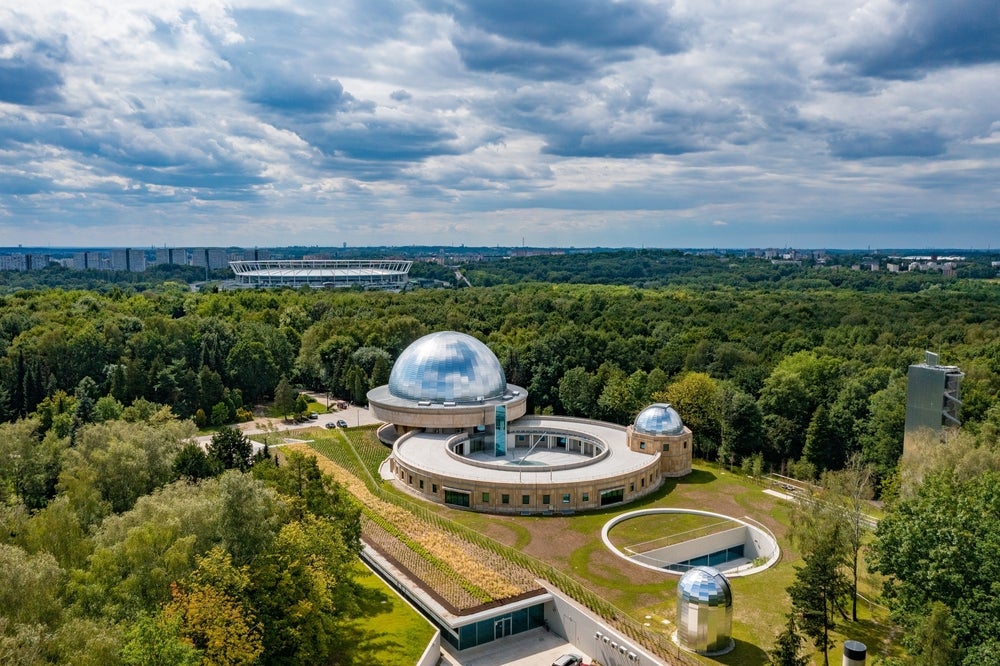
Most observatories and planetariums in Poland are named after Nicolaus Copernicus. The interactive science park Centrum Nauki Koperni, located in Warsaw, also bears his name. To visit Poland’s largest and oldest planetarium, all you need to do is take a short train ride just across the border. It’s located in Chorzów, which is part of the Katowice metropolitan area. It stands in the middle of Silesian Park, and right in front of it is a large statue—of Nicolaus Copernicus, of course.
City of Stars
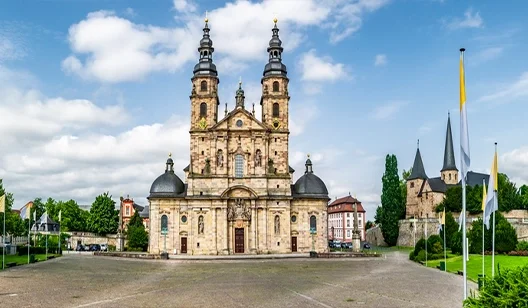
The German town of Fulda, the next stop on the Leo Express routes, was designated the first “Star City” (Sternenstadt) in Germany in 2019. This means it is the ideal place for stargazing.
TEXT: Jakub Jukl
PHOTOS: Shutterstock.com
You can find the full article in the autumn issue of Leo Express magazine
Share article
0 x
Copy URL



Log into the loyalty program Smile Club
Don't have an account yet?
By logging in I agree with conditions of the loyalty program, processing of personal data and declare that I have reached the age of 16. Cancellation of tickets is only possible to leo credits.